
Wet Wipes Knowledge
Travel Wet Wipes Manufacturer
For importers, distributors, wholesalers, retailers, and private label brand owners, travel wet wipes manufacturer is more than a search term. It is a sourcing decision that affects product quality, landed cost, brand positioning, repeat orders, and customer trust. The wet wipes market continues to expand across baby care, personal care, household cleaning, pet care, professional hygiene, and specialty aftercare products, but buyers need clear information before choosing a factory.
ANHUI EVERION TECHNOLOGY CO., LTD., operating under the EVERION brand, is an OEM Wet Wipes manufacturer supporting global buyers with Private Label Wet Wipes, Custom Packaging, Custom Formulation, MOQ 5000 Packs, Free Samples, GMP Workshop production, ISO 8 Cleanroom management, and DDP shipping options where available. This article explains the practical points B2B buyers should understand before developing or sourcing custom wet wipes wet wipes.
Wet wipes are purchased because they save time, simplify hygiene, and make cleaning or care tasks more convenient. In B2B trade, demand is shaped by retail trends, e-commerce growth, household habits, professional use cases, and private label expansion. Buyers are not only looking for a product that can be produced; they need a product that fits a channel, a price point, and a brand promise.
For custom wet wipes products, the most successful projects usually begin with a specific customer need. A supermarket buyer may want strong shelf visibility and stable reorder pricing. A distributor may need flexible cartons and reliable supply. An e-commerce brand may focus on packaging photography, product claims, and review quality. A professional channel may care more about performance, documentation, and consistency.
Before requesting a quotation, define whether the product is value, mid-range, or premium. This decision affects fabric weight, formula complexity, packaging format, lid quality, artwork, carton design, and shipping cost. A low-cost product can work well in wholesale channels, while a premium product may need stronger claims, softer material, and a more polished pack design.
Positioning also prevents over-customization. Not every SKU needs the most expensive fabric or the longest ingredient list. The best OEM Wet Wipes projects match specifications to real market demand.
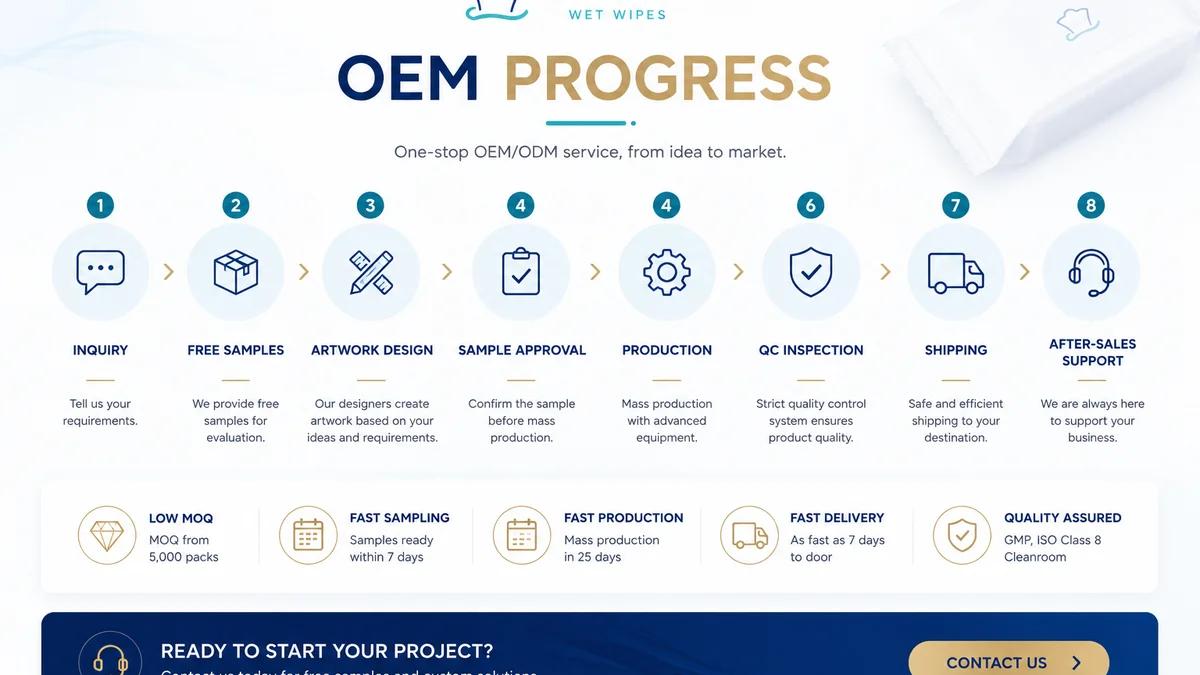
An OEM wet wipes factory looks at each project through material, liquid, packaging, machine compatibility, inspection, and shipment. A buyer may start with a simple idea, but the factory must convert that idea into specifications that can be produced consistently.
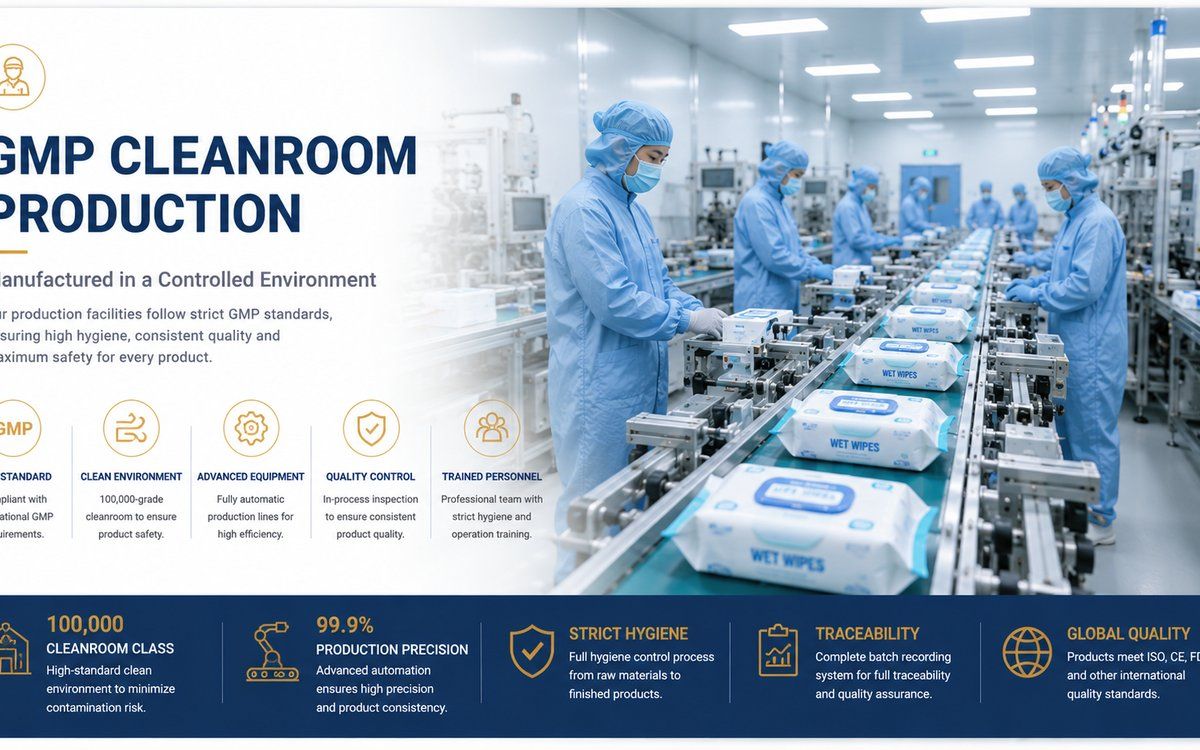
The main production elements include nonwoven fabric selection, liquid preparation, folding, cutting, filling, sealing, coding, carton packing, and final inspection. For skin-contact products and hygiene products, workshop management is especially important. EVERION supports production through GMP Workshop procedures and ISO 8 Cleanroom management, helping buyers reduce quality risk.
Custom Formulation allows buyers to build products for specific uses such as baby care, pet grooming, bathroom hygiene, surface cleaning, personal care, or aftercare. Formula choices may include fragrance-free, alcohol-free, moisturizing, antibacterial, aloe vera, saline-based, plant extract, degreasing, or quick-dry directions.
The formula should match the target market and claim strategy. A sensitive skin wipe should avoid harsh positioning. A cleaning wipe should focus on surface performance. A flushable wipe must consider material compatibility. A disinfecting wipe may need local compliance review before claims are printed.
The fabric controls softness, strength, absorbency, texture, lint level, and product feel. Common wet wipes materials include spunlace nonwoven, viscose-polyester blends, textured nonwoven, bamboo fiber materials, biodegradable options, and dispersible materials for flushable wipes.
Buyers should always test samples. Photos and specifications are helpful, but they cannot replace touching the wipe, checking wetness, testing strength, and using it in the intended scenario.
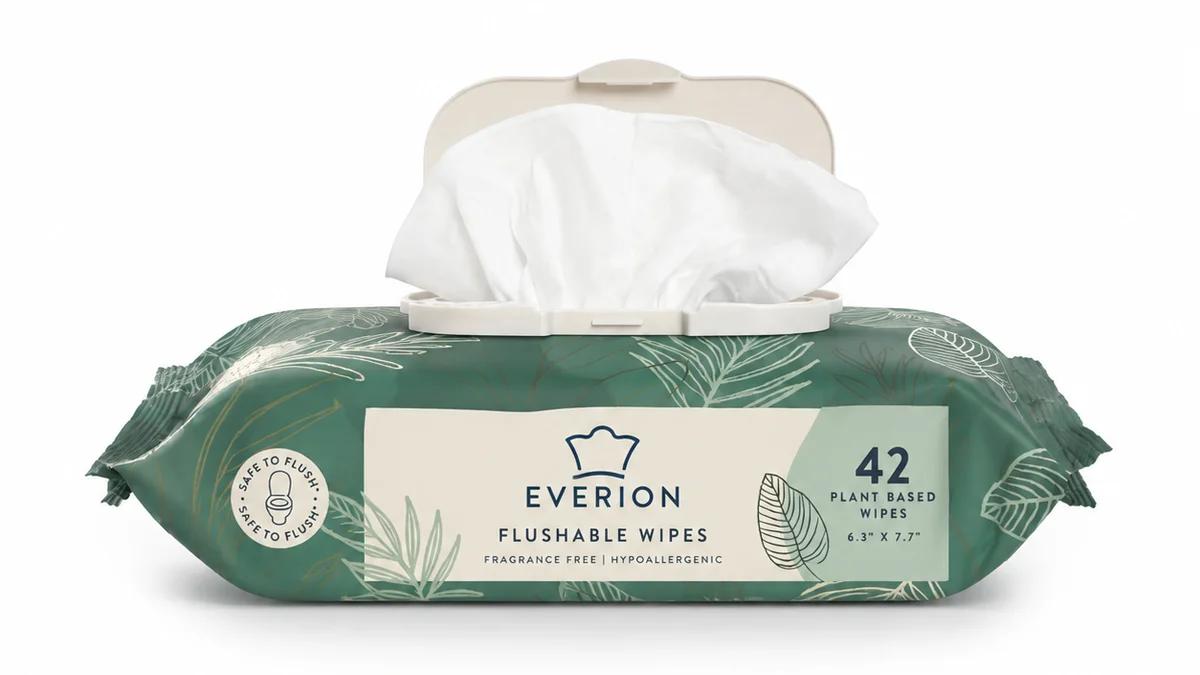
Custom Packaging is one of the biggest advantages of Private Label Wet Wipes. Packaging communicates product type, benefits, claims, wipe count, instructions, and brand identity within seconds. It also protects the product from drying out, leaking, or being damaged during shipping.
Common packaging options include soft packs, flip-top lid packs, resealable label packs, canisters, buckets, sachets, travel packs, refill packs, and multi-pack bundles. The right option depends on use case and channel.
Retail packaging should be clear, attractive, and easy to compare on shelf. E-commerce packaging must also survive parcel delivery and look professional in product photos. For private label projects, the front panel should not be crowded. It should highlight the product type, main benefit, wipe count, and two or three credible claims.
EVERION provides free packaging design support, which is helpful for buyers without an in-house design team. Good design support can reduce artwork mistakes and speed up launch.
Claims should be practical and supportable. Words such as disinfecting, antibacterial, flushable, biodegradable, organic, medical, or hypoallergenic may require extra review depending on the destination market. The manufacturer can help with product development, but buyers should confirm local regulations with importers, retailers, or regulatory consultants.
MOQ affects manufacturing cost, packaging cost, and inventory risk. EVERION offers MOQ 5000 Packs, which is suitable for many private label launches, market tests, and distributor trial orders. For buyers, this lower starting point can make it easier to test product-market fit before committing to larger production.
Wet wipes cost is affected by fabric type, fabric weight, wipe size, wipe count, liquid formula, packaging film, lid or label, order quantity, carton configuration, and shipping method. Buyers should compare total landed cost, not only factory price. Wet wipes contain liquid and are heavy, so freight planning is part of product planning.
Free Samples help buyers evaluate material, scent, wetness, sheet size, packaging, and user experience before mass production. Samples also help sales teams show the product to distributors, retailers, or online partners. A sample approval record should be kept so mass production can be compared against the agreed standard.
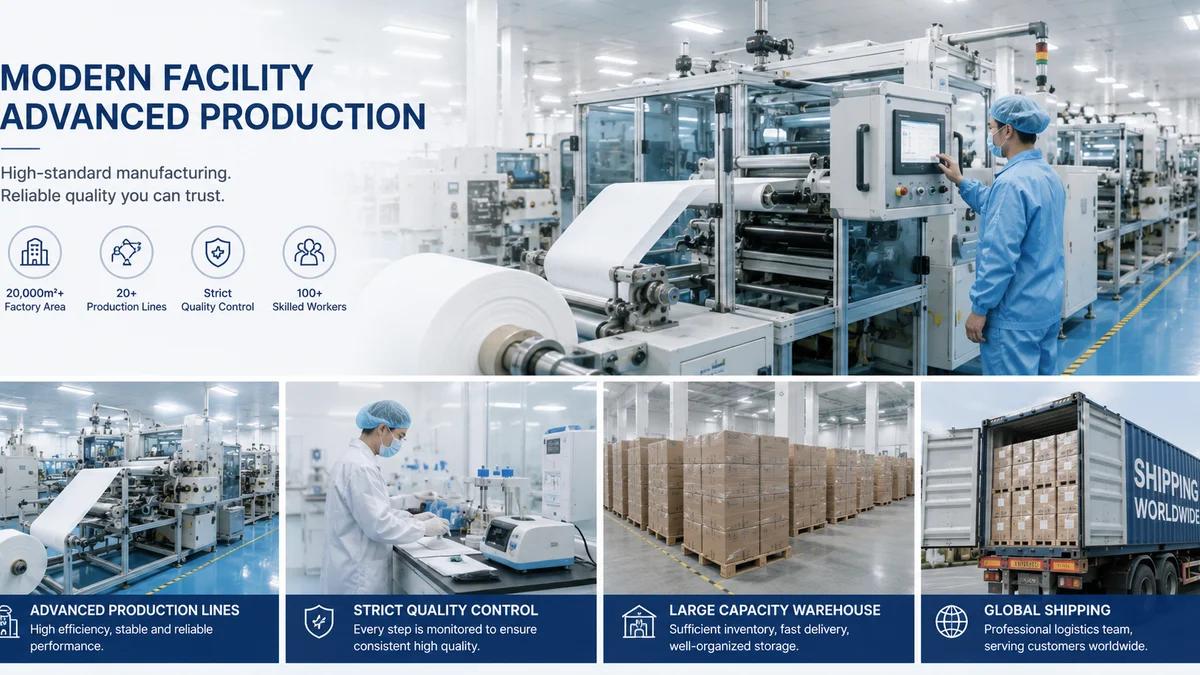
Choosing a wet wipes supplier is a risk-management decision. Buyers should evaluate workshop conditions, production capacity, quality control process, communication speed, sample accuracy, packaging support, documentation, and export experience.
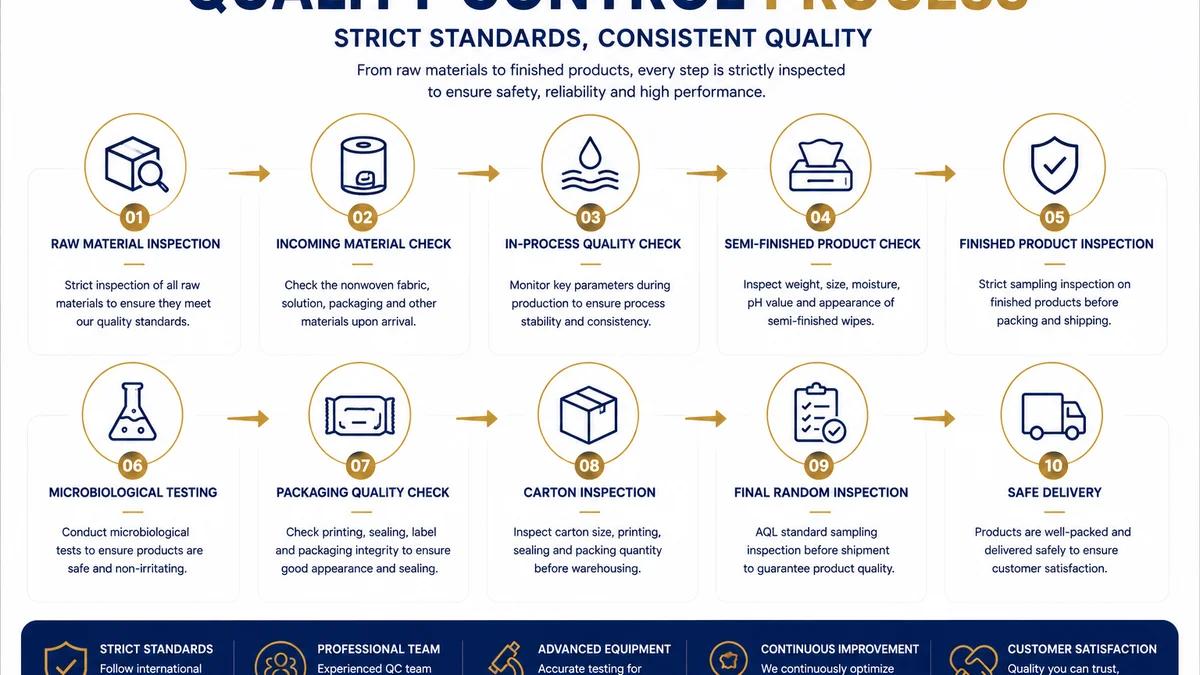
EVERION's GMP Workshop and ISO 8 Cleanroom help support hygienic manufacturing, especially for baby wipes, personal care wipes, aftercare wipes, and other products that contact skin. Quality checks typically include fabric inspection, liquid preparation control, wipe count, sheet size, moisture level, sealing strength, printing accuracy, batch coding, and carton strength.
Ask the supplier which fabric options are available, whether the formula can be customized, what packaging formats can be produced, what the MOQ is, how samples are handled, what lead time is expected, and whether DDP shipping is available. Clear answers at the beginning can prevent delays later.
International buyers should plan production time, packaging printing time, inspection time, freight time, customs requirements, and reorder timing. If a product will be sold through retailers, late delivery can affect promotions and shelf availability. If it will be sold online, inventory gaps can reduce ranking and customer trust.
DDP shipping can be useful for buyers who want a clearer door-to-door cost. It may not fit every destination or order size, but it is worth discussing during quotation.
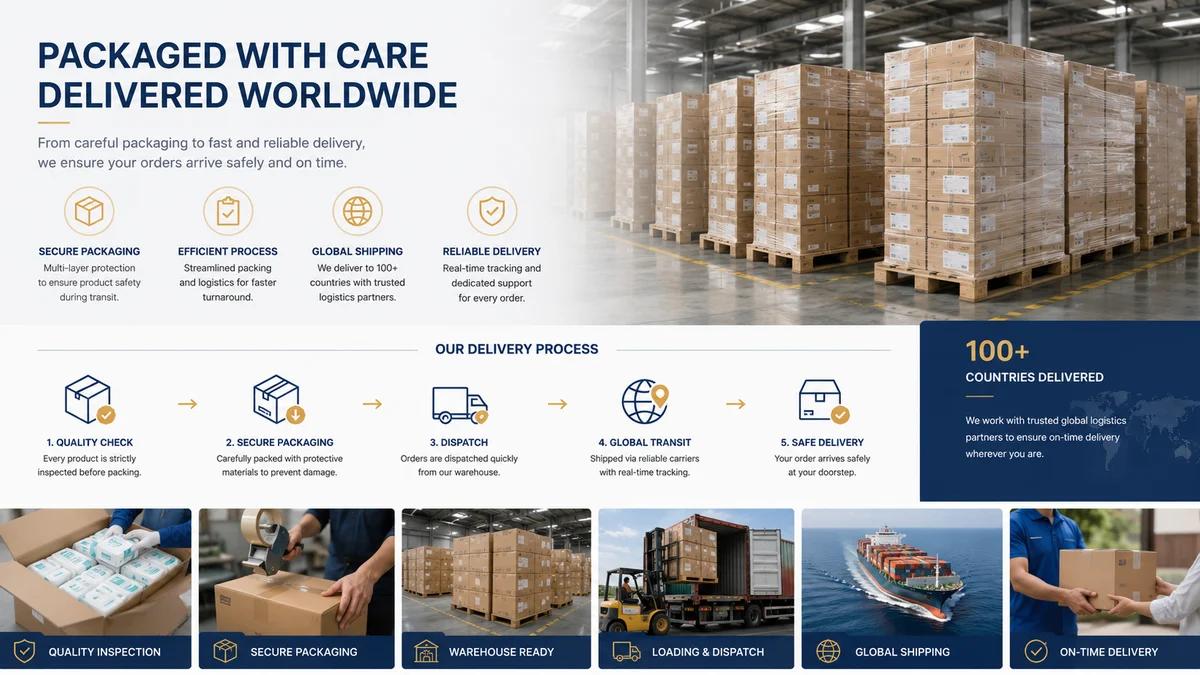
For a travel wet wipes manufacturer project, start with one strong SKU rather than too many variations. A focused first product is easier to sample, price, photograph, import, and sell. Once the market responds, buyers can add more pack sizes, formulas, scents, or related products.
Confirm wipe size, fabric weight, liquid percentage, formula direction, fragrance, packaging type, pack count, carton quantity, shelf life, batch code position, and shipping destination. These details allow the manufacturer to provide a more accurate quotation and prevent misunderstandings during production.
Differentiation can come from softer fabric, stronger cleaning performance, fragrance-free positioning, eco-friendly materials, premium lid design, professional packaging, or a clear use-case message. For custom wet wipes wipes, the strongest brands usually communicate one main benefit very clearly instead of trying to say everything at once.
Travel Wet Wipes Manufacturer is an important topic for B2B buyers who want to build a reliable wet wipes product line. Success depends on clear positioning, suitable materials, Custom Formulation, Custom Packaging, responsible claims, sample testing, quality control, and realistic shipping planning.
ANHUI EVERION TECHNOLOGY CO., LTD. and the EVERION brand support global buyers with OEM Wet Wipes manufacturing, Private Label Wet Wipes, MOQ 5000 Packs, Free Samples, GMP Workshop production, ISO 8 Cleanroom standards, custom product development, and export support. For buyers preparing a new wet wipes project, working with an experienced manufacturer can reduce sourcing risk and speed up product launch.
Share your product category, packaging idea, quantity, and target market. Our export team will help confirm the next step.