
Wet Wipes Knowledge
Custom Wet Wipes Formulation and Packaging Guide for Private Label Buyers
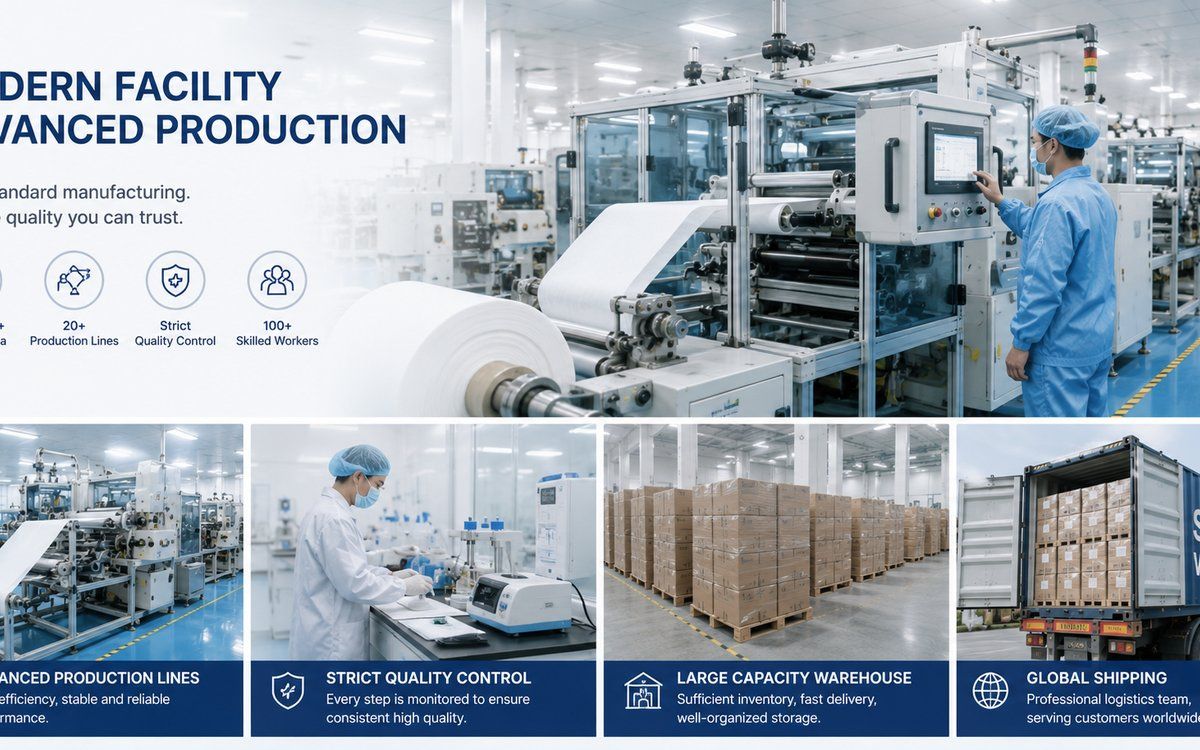
Custom formulation and packaging are the two biggest factors that separate a basic wet wipes product from a successful private label product. For importers, distributors, wholesalers, and brand owners, the right formula creates product performance, while the right packaging creates trust, shelf appeal, and brand recognition.
ANHUI EVERION TECHNOLOGY CO., LTD., under the EVERION brand, provides OEM wet wipes manufacturing for baby wipes, personal care wipes, flushable wipes, tattoo wipes, piercing aftercare wipes, pet wipes, disinfecting wipes, and household cleaning wipes. EVERION supports OEM and private label service, MOQ from 5,000 packs, free samples, free packaging design support, GMP workshop production, ISO 8 cleanroom management, custom formulations, custom packaging, and DDP shipping support where available.
This guide explains how B2B buyers can plan custom wet wipes formulas and packaging more effectively before placing an OEM order.
Wet wipes may look simple, but buyers compete through product details. Two packs may contain the same number of wipes, yet customer experience can be very different because of formula, fabric, wetness, scent, packaging, and dispensing.
Custom formulation helps you match your product to a specific use case, such as baby care, pet grooming, bathroom hygiene, household cleaning, or tattoo aftercare. Custom packaging helps communicate that use case clearly and makes your product easier to sell.
For private label brands, customization also protects you from selling the same generic product as everyone else.
Before choosing ingredients or packaging, define the product category. A baby wipe, pet wipe, disinfecting wipe, and kitchen cleaning wipe should not use the same formula or message.
Ask these questions first:
Clear answers make formulation and packaging decisions much easier.
Formulation depends on product use and market positioning. EVERION can support custom formulations for different wet wipes categories. Common directions include mild baby care formulas, moisturizing personal care formulas, flushable toilet wipe formulas, deodorizing pet wipe formulas, disinfecting or antibacterial surface formulas, degreasing kitchen formulas, and gentle aftercare formulas.
Buyers may request features such as:
The best formulation is not always the most complex. A simple, stable, well-positioned formula can be more effective than a long ingredient list with unclear benefits.
Claims must match the formula and the target market. For example, baby wipes may use claims like gentle, alcohol-free, or fragrance-free if supported. Cleaning wipes may use multi-surface or degreasing claims. Disinfecting claims may require specific testing or registration depending on the country.
Buyers should confirm local regulations before printing packaging. This is especially important for disinfecting wipes, antibacterial wipes, flushable wipes, and aftercare wipes.
An OEM manufacturer can help with product development, but the buyer should verify local compliance with import agents, retailers, or regulatory experts.
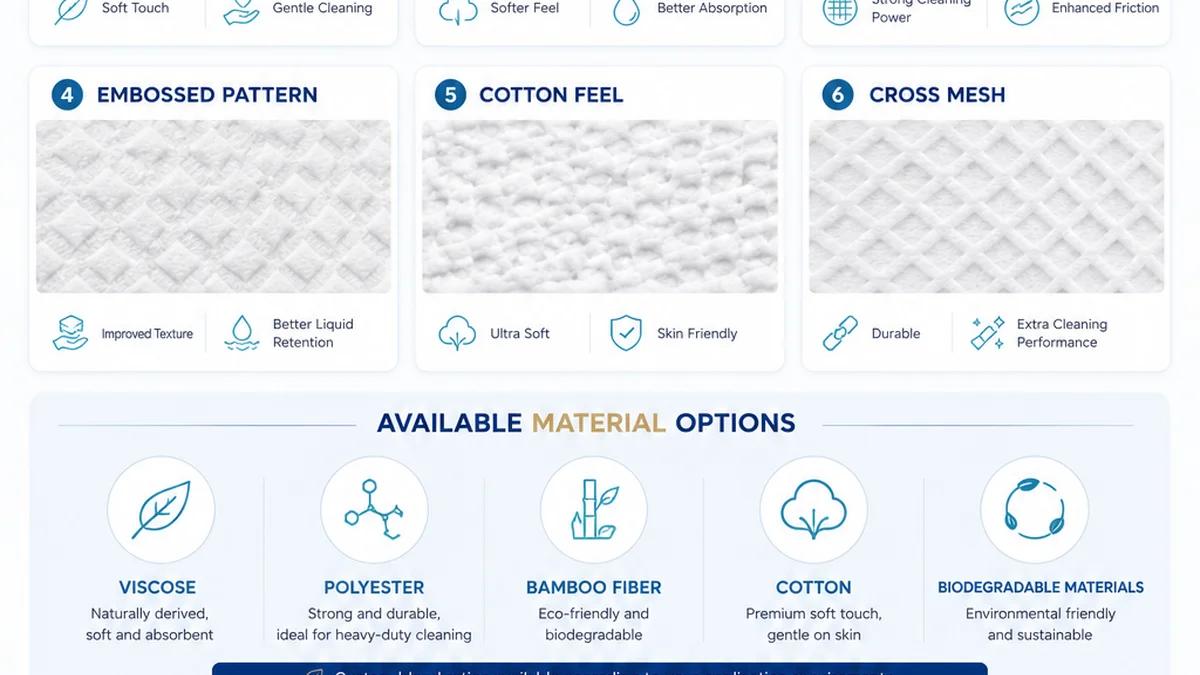
Formula is only one part of performance. The fabric determines softness, strength, absorbency, texture, and user feel. Common choices include spunlace nonwoven, viscose-polyester blends, textured nonwoven, biodegradable materials, and dispersible materials for flushable wipes.
Material should match use:
Request samples with different fabric weights and textures before confirming final specifications.
Packaging should protect moisture, support dispensing, and communicate brand value. Common wet wipes packaging types include soft packs, flip-top lid packs, resealable label packs, canisters, buckets, sachets, travel packs, refill packs, and multi-pack bundles.
Soft packs are common for baby wipes, pet wipes, and household wipes. Canisters are useful for disinfecting and cleaning wipes. Sachets work well for tattoo wipes, piercing wipes, travel wipes, and hospitality use. Buckets may be suitable for commercial cleaning products.
Packaging decisions should consider:
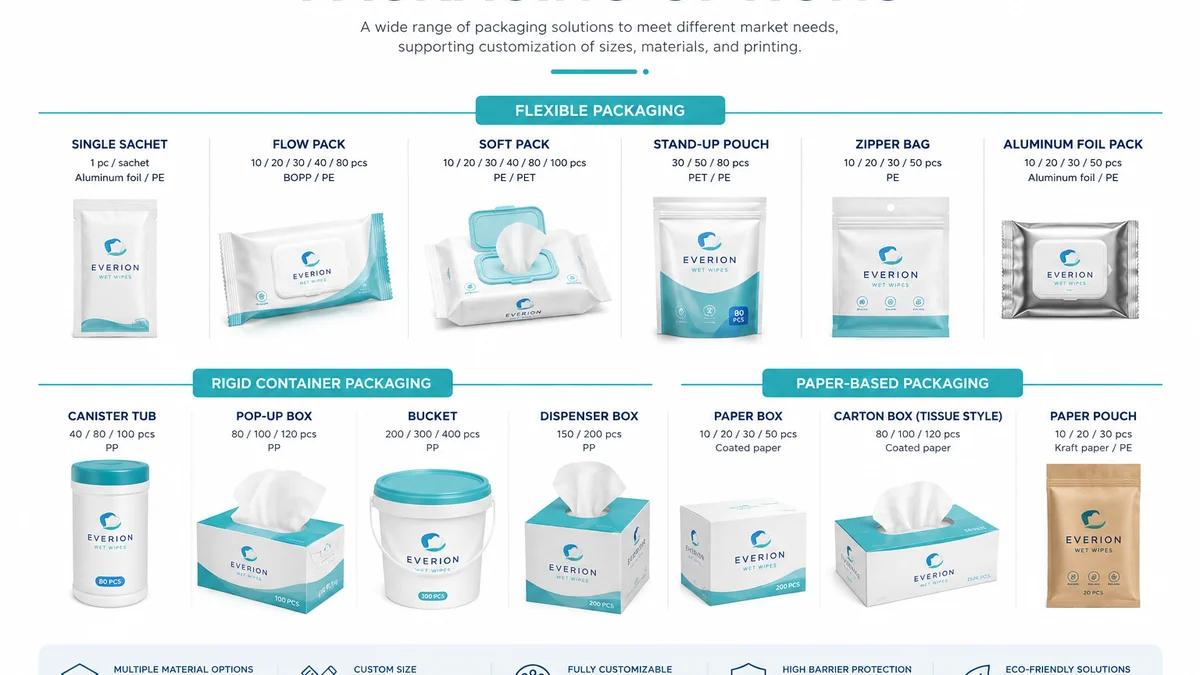
Good packaging design helps buyers sell faster. A private label wet wipes pack should clearly show product type, main benefit, wipe count, usage area, key claims, and brand identity.
For B2B buyers without an in-house design team, packaging development can be challenging. EVERION provides free packaging design support to help buyers create professional packaging layouts for retail, e-commerce, and distribution.
Design should be attractive but also practical. It must include barcode space, ingredient information, manufacturer or importer details, usage instructions, warnings, batch code area, and other market-specific information.
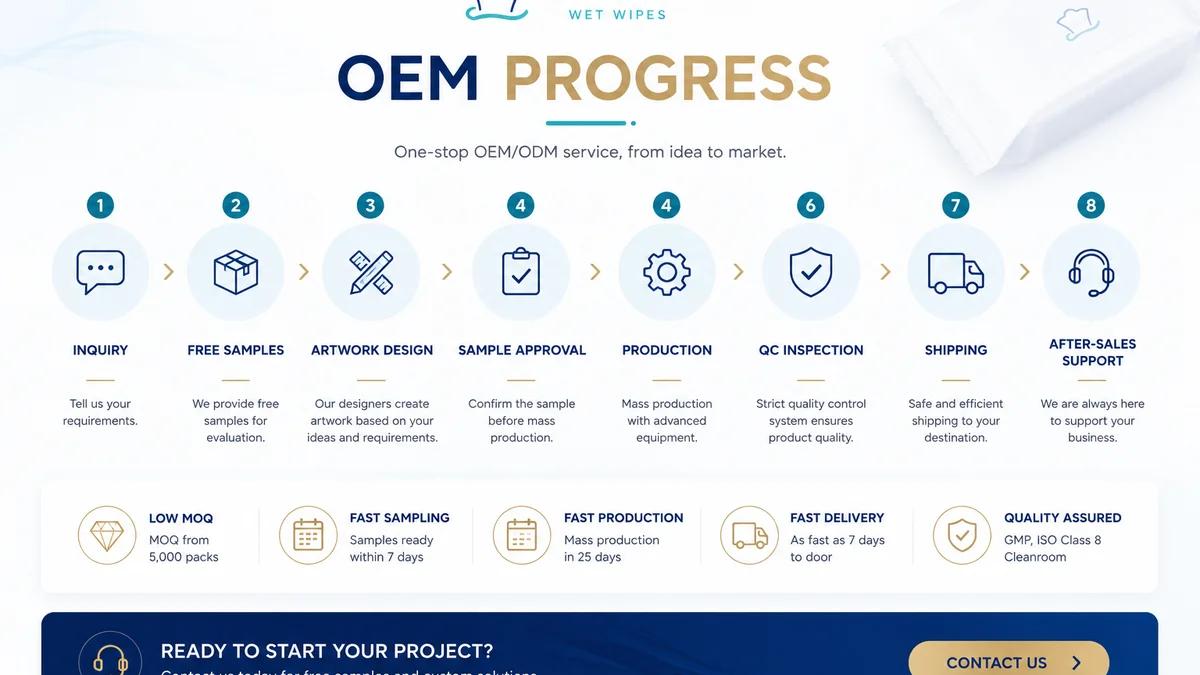
EVERION offers MOQ from 5,000 packs, which helps buyers test customized products without committing to very large inventory. For new brands, it may be better to launch one or two strong products first instead of too many SKUs.
A practical launch strategy may include:
After market feedback, buyers can add more formulas, packaging sizes, or product categories.
Samples are essential. Buyers should never rely only on photos or specification sheets. Wet wipes must be tested by touch and use. Check softness, wetness, scent, strength, pack sealing, lid quality, and overall presentation.
EVERION provides free samples so buyers can compare materials, formulas, and packaging options before confirming the final product.
When reviewing samples, keep notes on:
Once specifications are confirmed, the factory must produce according to approved samples. Quality control covers raw materials, liquid preparation, production line setup, filling, folding, sealing, coding, packing, and finished goods inspection.
EVERION uses GMP workshop management and ISO 8 cleanroom production to support hygienic wet wipes manufacturing. This is important for baby wipes, personal care wipes, aftercare wipes, and other skin-contact products.
Buyers should confirm all final details before production, including artwork, formula, material, wipe size, pack count, carton marks, shipping method, and lead time.
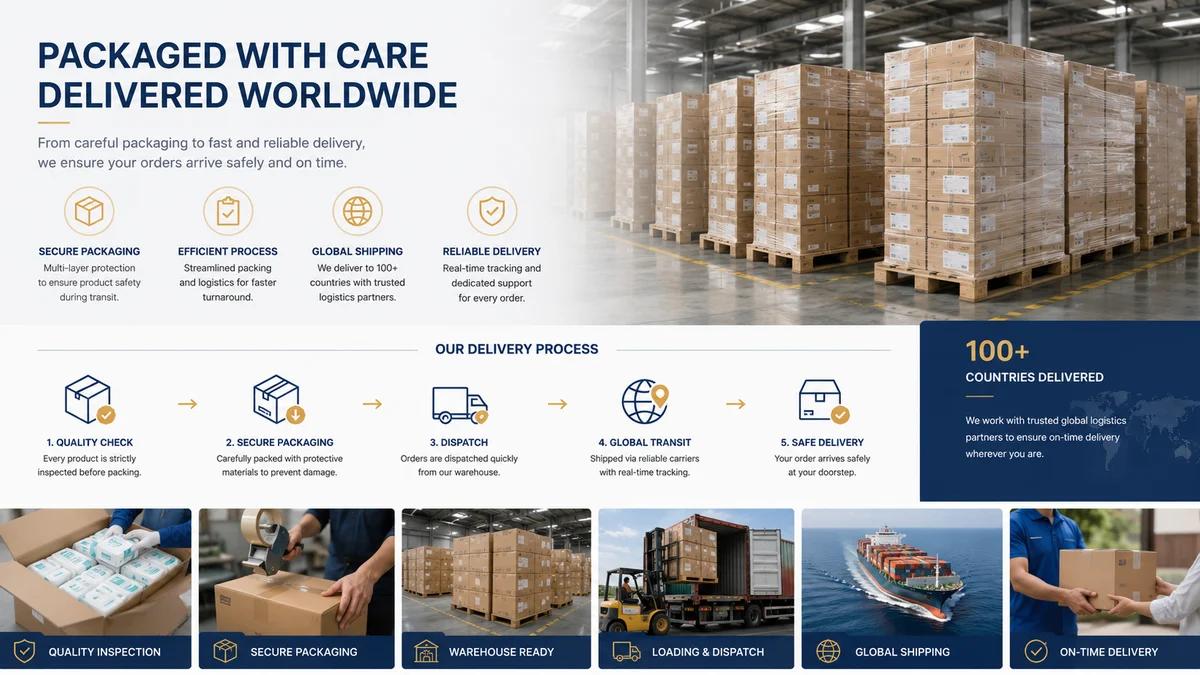
Wet wipes are heavy because of liquid content. Packaging size and carton configuration can affect loading quantity and freight cost. A lower unit price may not be the best choice if carton volume is inefficient.
DDP shipping, where available, can help buyers understand door-to-door cost and simplify import planning. EVERION can support DDP shipping for selected destinations.
Plan reorder timing early, especially if you sell through retailers or e-commerce platforms with strict delivery expectations.
Custom wet wipes formulation and packaging are essential for building a competitive private label product. Buyers should define the product category, choose suitable formula and fabric, design practical packaging, confirm claims carefully, test samples, and plan shipping costs.
EVERION supports B2B buyers with OEM wet wipes manufacturing, custom formulations, custom packaging, MOQ from 5,000 packs, free samples, free packaging design support, GMP workshop production, ISO 8 cleanroom management, and DDP shipping options.
For importers, distributors, wholesalers, and private label brand owners, a well-planned custom wet wipes project can become a scalable product line across personal care, baby care, pet care, cleaning, and specialty wipe markets.
Share your product category, packaging idea, quantity, and target market. Our export team will help confirm the next step.